Belt vs Chain Conveyors: What’s The Difference?
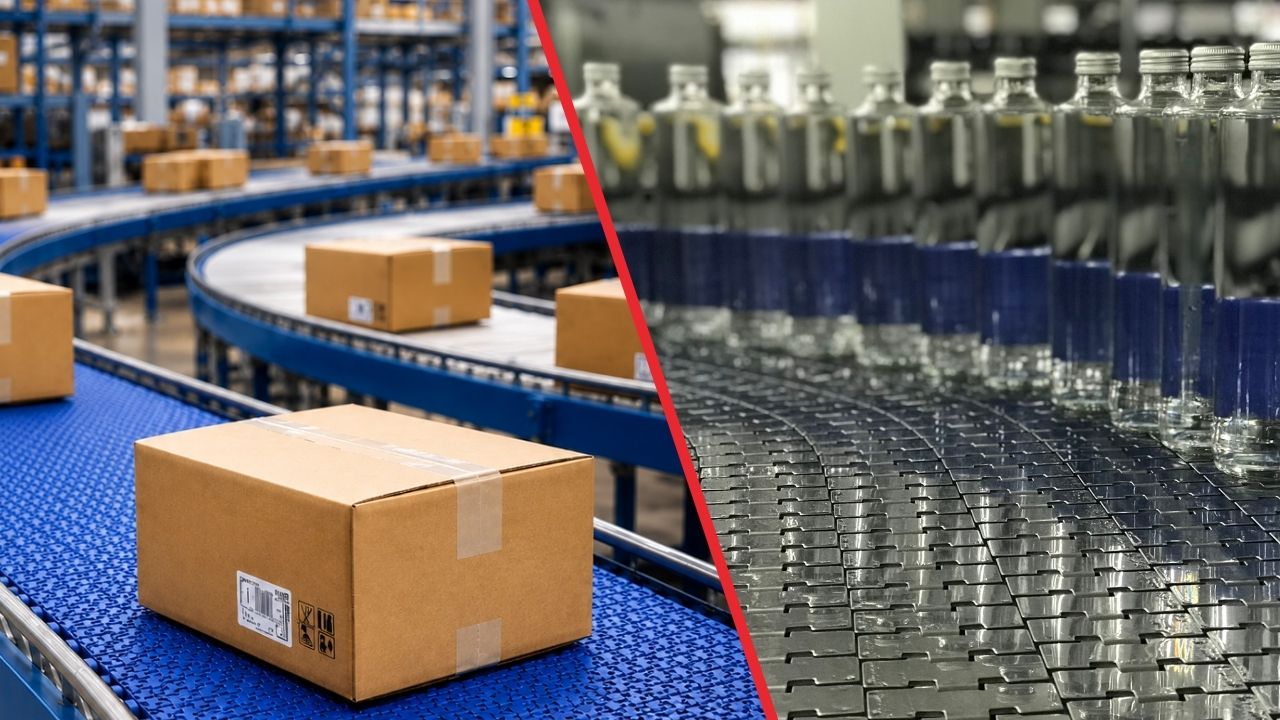
Choosing the right conveyor system is essential for improving productivity, reducing downtime, and ensuring efficient material handling. Two of the most commonly used conveyor types are belt conveyors and chain conveyors. While both are designed to transport products from one point to another, they operate differently and are suited to different applications.
Understanding the differences between belt and chain conveyors can help businesses select the most effective solution for their production environment.
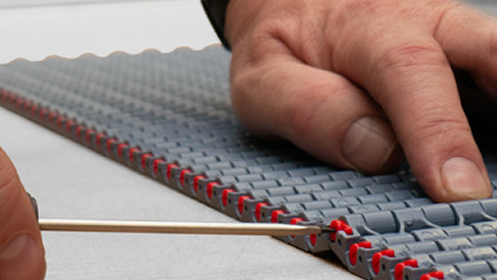
A belt conveyor uses a continuous belt to transport products. A traditional belt is driven by a motor and provides a smooth, consistent surface for moving items of various shapes and sizes. While traditional systems use smooth fabric or PVC belts running on rollers and pulleys, modern production lines frequently utilise high-performance modular plastic belts, pulled by precision molded or machined sprockets.
Belt conveyors are commonly used for lightweight to medium-weight products and are ideal where gentle product handling is required.
Typical applications include:
At Oadby Conveyors, we supply a comprehensive range of Movex modular conveyor belts, designed to suit a wide variety of industries and applications. Unlike traditional friction-driven belts, Movex modular belts are constructed from interlocking plastic segments that are positively driven by sprockets. Their modular design also allows for quick repairs, reduced downtime, and easy adaptation to changing production requirements, making them an ideal choice for modern conveyor systems.
A chain conveyor uses one or more chains to move products through the conveyor system. Rather than relying on a continuous belt, the chain is driven by sprockets, providing a robust solution for handling heavier loads or products that require greater stability.
Chain conveyors are widely used in demanding industrial environments where strength and durability are essential.
Common applications include:
At Oadby Conveyors, we supply a comprehensive range of Movex conveyor chains, including flat top, side-flexing, grip top, and steel chains to suit a wide variety of conveyor systems and industries. Our range of conveyor chains delivers reliable performance, excellent wear resistance, and long service life. With a wide choice of chain styles and materials available, we can help you select the ideal solution for your specific conveyor application.
Although both conveyor types perform the same basic function, there are several important differences:
Chain conveyors are generally better suited to transporting heavier loads and bulky products. Their robust construction allows them to handle greater weights without compromising performance.
Belt conveyors are typically used for lighter products that require a smooth conveying surface.
Belt conveyors provide gentle, continuous movement, making them ideal for fragile or delicate items that could be damaged by vibration.
Chain conveyors offer excellent stability for heavier products and items with flat, rigid bases.
Chain conveyors are designed to withstand demanding operating conditions, including heavy loads, high temperatures, and continuous use.
Belt conveyors are also durable but may require more frequent belt replacement depending on the operating environment and product type.
Both systems require regular maintenance, but the components differ.
For belt conveyors, maintenance often focuses on:
For chain conveyors, attention is typically given to:
Routine maintenance helps maximise system lifespan and reduce unexpected downtime.
While chain and modular belt systems are highly durable, their lifespan depends heavily on the surfaces they slide on. Oadby Conveyors is also a leading manufacturer of custom-machined plastic wear strips and chain guides. Using the right chain guide material alongside a premium Movex chain can cut friction in half and double the life of your conveyor system.
Belt conveyors are highly versatile and can transport a wide variety of products, from loose materials to packaged goods.
Chain conveyors are often the preferred option for specialised applications where precise product positioning, high strength, or heavy-duty performance is required.
The best choice depends on your operational requirements. Consider factors such as:
If you’re transporting lightweight products in a clean production environment, a belt conveyor may be the ideal solution. If your operation involves heavy loads or demanding conditions, a chain conveyor is often the better choice.
Our experienced conveyor specialists can help assess your application and recommend the most suitable system, contact our team today.
Both belt conveyors and chain conveyors offer reliable material handling solutions, but each has its own strengths. Belt conveyors excel in smooth, efficient handling of lightweight products, while chain conveyors provide the strength and durability needed for heavier-duty applications.
At Oadby Conveyors, we supply a wide range of Movex conveyor chains, modular belts, sprockets, bearings, and conveyor components to support both belt and chain conveyor systems. Plus, with just under 50 years’ industry experience, our experienced team are here to help you select the right solution to maximise the performance, reliability, and efficiency of your operation. Get in touch today for your complete conveyor solution.